

Anyone with a tree nut allergy knows all too well how hard it is to find a chocolate spread they can enjoy without worry.
The spread market is dominated by products made with hazelnuts, almonds and tree nuts in general, and finding a real alternative, truly designed for people with allergies, isn’t always easy…
And yet the desire for an indulgent breakfast, a slice of bread topped with something delicious, is a simple pleasure no one should have to give up.
Why tree nut allergy is a real problem when choosing spreads
Tree nut allergy, which includes hazelnuts, almonds, walnuts, cashews and pistachios, is one of the most common food allergies.
According to data from the Italian Ministry of Health, about 9.7% of the European adult population has a genuine tree nut allergy. In Italy, industry surveys estimate that almost one million households have at least one member who has to deal with this intolerance.
Reactions can range from hives to anaphylactic shock in the most severe cases, which makes choosing foods a matter of health, not preference.
How to read a spread label
On the label of every product you’ll always find the ingredient list and the nutrition facts.
The ingredient list, required by law, shows everything the product contains in descending order of quantity: the first ingredient is the one present in the largest amount, the last one in the smallest traces.
Checking that tree nuts don’t appear anywhere on the list is the first step for people with allergies or intolerances. The allergen section, usually shown in bold or in a separate box, lists the fourteen main allergens recognized by European regulations and must always be on the label.
It’s always worth taking a look at the nutrition facts too: sugar, protein, fiber and fat content say a lot about the real quality of a product, beyond what is communicated on the front of the pack. A clear, complete label is always a good sign.
Alternative ingredients: what’s inside a hazelnut-free or nut-free chocolate spread
Vegetable oils and seed butters
Many nut-free spreads replace hazelnuts with vegetable oils such as sunflower or palm oil, or with sunflower seed butter. This solution ensures a creamy end product but often sacrifices the nutritional profile: you get a tasty spread that’s low in protein and fiber, with a high percentage of saturated fat. It’s an acceptable choice from an allergy standpoint, less so in terms of overall nutritional quality.
A legume base: the most interesting alternative
In recent years a far more interesting solution has been gaining ground: using legumes as the base for chocolate spreads. Chickpeas, yellow peas and red lentils, turned into flour, provide a creamy, thick texture, an excellent supply of plant protein and fiber, and are naturally free from nut-related allergens.
The result is a spread that works beautifully in terms of texture, has a balanced flavor thanks to the combination with cocoa, and suits a great many different dietary needs.
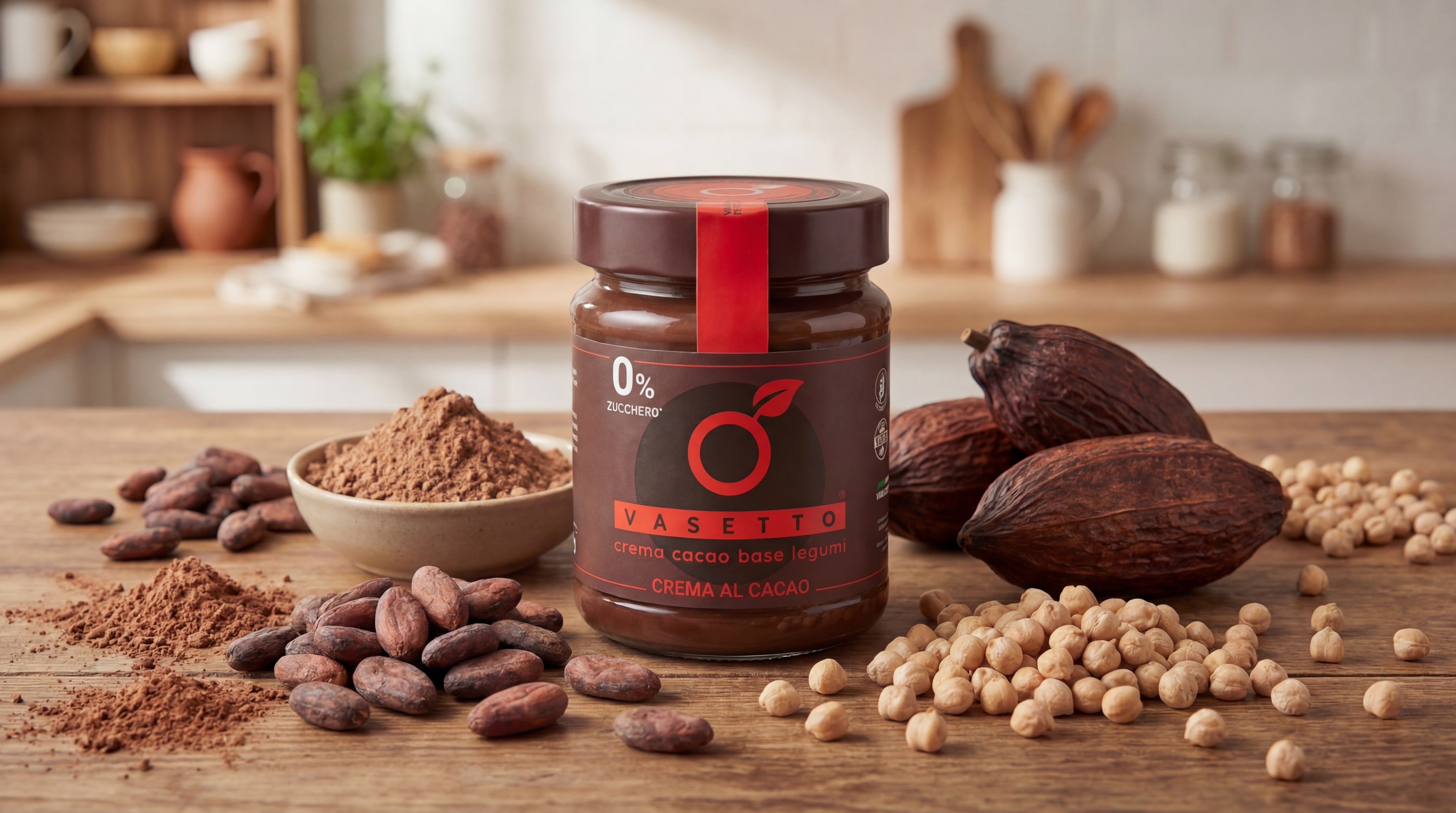
Vasetto’s cocoa spread, for example, is made with 100% Italian chickpea and yellow pea flours. It contains no nuts, gluten, added sugars or milk.
Every 100 g provides 21 g of protein and 17 g of fiber, numbers that make it not only safe for people with allergies but also a mindful choice for anyone who wants to eat well without giving up pleasure.
Few cocoa spreads can say this: it has no allergens, no sugar, and it’s made with Italian legumes. You can discover it directly on vasetto.it.
Nut-free chocolate spread: who is it for?
A chocolate spread that is nut-free, gluten-free, lactose-free and has no added sugars meets the needs of a much wider audience than you might think. It’s suitable, of course, for people allergic to hazelnuts or tree nuts in general, but also for those following a vegan diet, people with celiac disease or gluten sensitivity, people who are lactose intolerant, families with children with multiple allergies and anyone on a low-sugar diet for medical or lifestyle reasons.
It’s important to stress that "nut-free" doesn’t necessarily mean a lower-quality product. On the contrary, when the substitution is made with functional ingredients such as legumes, you can get a spread with a better nutritional profile than traditional alternatives, with less sugar, more protein and more fiber.
How to use a hazelnut-free chocolate spread in the kitchen
You can use it in all the same ways as any other spread. At breakfast on toast, rusks or rice cakes, it’s a simple way to start the day with a good amount of protein. As a filling for homemade desserts, cakes, crepes or pancakes, it holds up very well when baked and blends easily with the other ingredients. For a quick snack, a spoonful straight from the jar with some fresh fruit is a balanced and satisfying treat.
Athletes will be glad to know that a spread high in protein and fiber can be a valuable addition to both pre-workout and recovery meals. Those on a low-calorie or low glycemic index diet will appreciate the absence of added sugars, which makes the product much easier to fit into a structured meal plan.
Frequently asked questions about nut-free chocolate spread
Does a hazelnut-free chocolate spread taste the same?
It depends a lot on the ingredients used. Spreads made with legumes and pure cocoa offer an intense, full-bodied taste, different from the classic hazelnut spread but just as enjoyable. No hazelnuts doesn’t mean no flavor: quality cocoa, combined with the creamy texture of legumes, creates a rich aromatic profile that won’t disappoint dark chocolate lovers.
Do legume-based spreads contain starches that raise blood sugar?
Legumes have a moderate glycemic index, and their abundant fiber further slows the absorption of sugars. With no added sugars, a spread made with legumes and cocoa is one of the most favorable choices in terms of blood sugar among all the spreads on the market. However, if you have diabetes or specific metabolic conditions, it’s best to consult your doctor or nutritionist.
Where can I buy a nut-free chocolate spread?
You can find Vasetto’s cocoa spread directly on vasetto.it. The product comes in a 250 g jar and is made with Italian ingredients only, with no allergens, no sugar and no gluten.

