

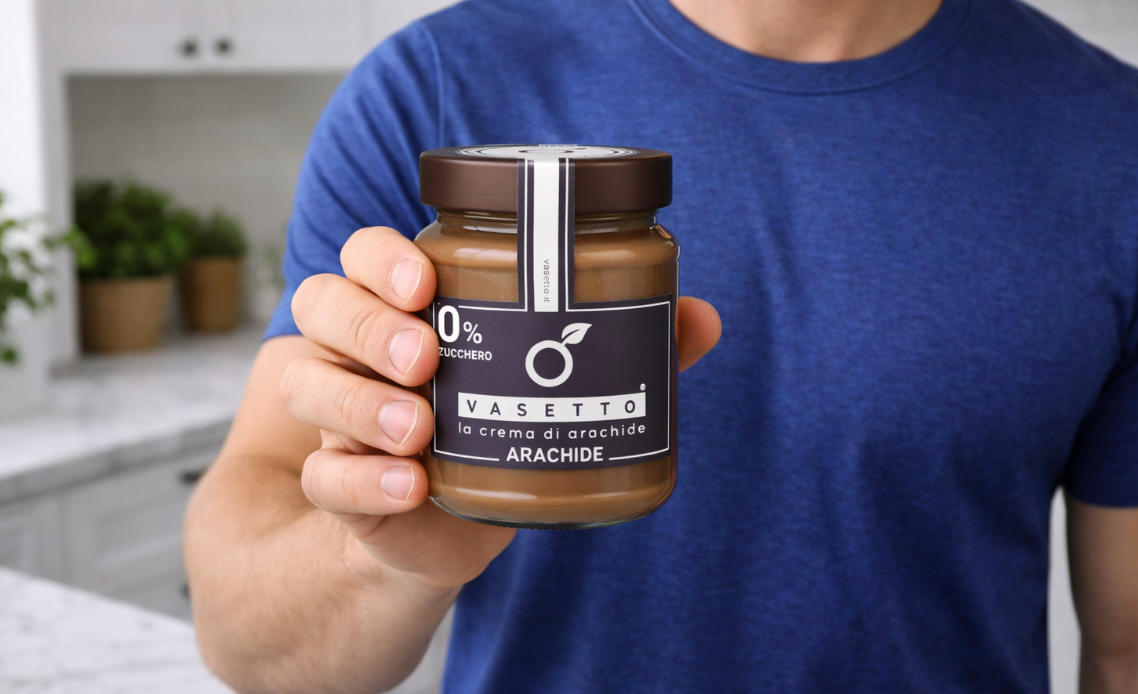
For anyone who trains regularly, follows a low-calorie diet or simply wants a guilt-free breakfast, a protein spread with no added sugars almost sounds too good to be true.
Taste, creaminess and a protein-focused nutritional profile, all without added refined sugars: is it really possible? The answer is yes, but with a few important clarifications that will help you choose a genuinely good product instead of falling for misleading marketing.
What exactly "no added sugars" means in a protein spread
The claim "no added sugars" is regulated by Regulation (EC) No 1924/2006 and means that no monosaccharides, disaccharides or any other food used for its sweetening properties have been added to the product.
However, this doesn't mean the product contains no sugar at all: the sugars naturally present in the ingredients, such as those in hazelnuts, milk or cocoa, remain and must always be declared in the nutrition table.
So it's essential not only to check the "of which sugars" line in the table, but also to read the ingredient list carefully to make sure no sucrose, glucose, fructose or sugary syrups have been used.
Many manufacturers replace sugar with polyols such as maltitol or erythritol, which lower the glycemic index but still count toward calories. Others opt for natural sweeteners such as agave syrup or stevia, or choose not to add anything at all, relying solely on the natural sweetness of roasted nuts.
Protein in spreads: where it comes from and how much there is
A spread can be considered "high-protein" when protein makes up a significant share of its nutritional profile, generally starting from 15-20% of the total. The most common protein sources in spreads with no added sugars are two: whey protein, which provides a complete amino acid profile but makes the product unsuitable for vegans and people intolerant to milk proteins, and plant proteins, derived from pea, rice or soy, which offer a plant-based alternative with good biological value.
That said, spreads made from pure nuts, such as peanut, almond or hazelnut spreads, already naturally contain a notable amount of protein, ranging from 10 to 25% depending on the nuts used.
A peanut spread with 60% peanuts, for example, easily provides around 10-15 grams of protein per 100 grams of product without the addition of any external protein ingredient. This makes nut spreads a good option also for those who want to increase their protein intake without turning to products with processed ingredients.
Protein spread for athletes: how to fit it into your eating routine
For those who train, a protein spread with no added sugars can be added to a daily eating routine in a practical, tasty way.
At breakfast spread on slices of whole-grain or rye bread, paired with Greek yogurt or as a topping on oatmeal, or used to make protein pancakes: there are plenty of ways to enjoy it.
The ideal time is before or after a workout, when protein and energy support muscle recovery and provide fuel for the session. Spreads with a high nut content also provide a good amount of unsaturated fats, valuable for athletes' cardiovascular well-being.
Read also: What to eat before exercise: recommended sweet and savory foods
Protein spread on a diet: can you eat it without going over?
People on a diet are often wary of spreads because of their calorie content, which in nut-based versions ranges between 550 and 650 kcal per 100 grams. But the point isn't to give up the product, it's to manage the portion.
A 20-25 gram serving is enough to satisfy a sweet craving, provide a good amount of protein and keep calories under control. Compared to traditional sugar-rich spreads, protein spreads with no added sugars have a lower glycemic index and promote a longer-lasting feeling of fullness, a particularly useful feature for anyone on a low-calorie plan.
Sugar-free vegan protein spread: the best plant-based options
The segment of vegan protein spreads with no added sugars is growing fast. Specialized producers are developing increasingly refined recipes that use pea or rice protein as a protein boost, combined with quality nuts and cocoa.
These spreads are by definition lactose-free, dairy-free and also suitable for people with allergies or those following a plant-based diet. The result is a product that combines taste, nutritional functionality and dietary inclusivity in a single jar.
Vasetto.it's protein spreads are designed precisely to meet these needs: traceable ingredients, recipes with few recognizable components, no added sugar and a nutritional profile that supports an active lifestyle without giving up great taste.
How to choose a sugar-free protein spread: what to look for on the label
Choosing a good sugar-free protein spread requires attention to three key elements on the label:
-
Percentage of nuts or of the main protein source: the higher it is, the better the quality of the product.
-
Ingredient list, which should be short with easily recognizable items: no palm oil, no artificial flavors, no unnecessary emulsifiers.
-
Nutrition table, where the protein value should be clearly stated along with the sugar content, which in no-added-sugar versions should come exclusively from natural ingredients.
One last tip: be wary of products with a very long ingredient list that includes lots of additives, large amounts of polyols or multiple synthetic sweeteners. A good sugar-free protein spread doesn't need to mask its taste with chemical tricks: if the nuts are high quality, the flavor is already there.
Ready to discover the right protein spread for your goals? Explore Vasetto.it's selection of sugar-free protein spreads: intense flavors, clean ingredients and a nutritional profile designed for those who don't want to give up taste, even when they're training.


